
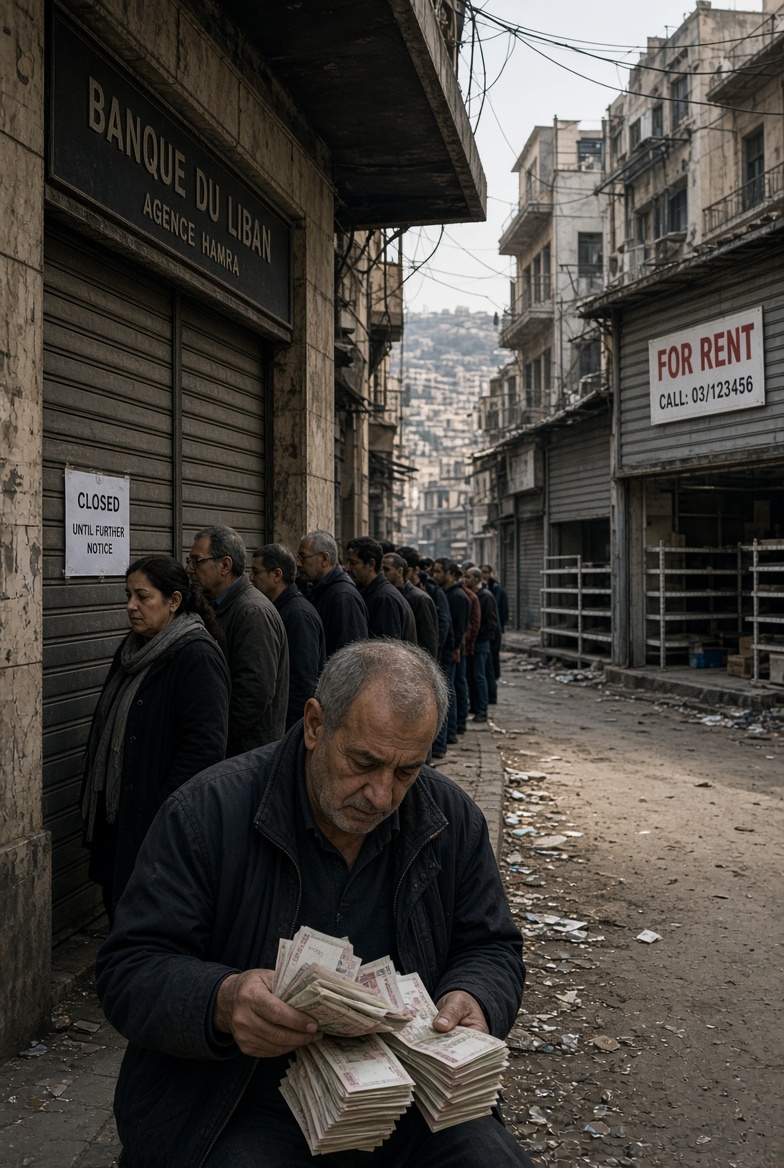
Between February and May 2025, Lebanon experienced a sharp deterioration in living conditions driven by currency collapse, fuel shortages, and the residual effects of earlier cross-border exchanges. Public services, already severely degraded, faced further strain as electricity supply fell to a few hours per day in many areas and hospital operations became increasingly dependent on private generators and external support.
The presence of large numbers of Syrian refugees and newly displaced Lebanese from southern districts intensified competition for scarce resources. Humanitarian organisations reported rising food insecurity and limited capacity to scale up cash assistance amid liquidity constraints and banking restrictions. Cross-border movements toward Syria remained risky, while irregular migration attempts toward Europe increased.
From a geopolitical standpoint, the crisis exposed Lebanon’s position as a secondary theatre of regional rivalry. External support for different political factions continued to shape the operating environment for aid actors, reducing the space for impartial humanitarian action and raising the risk of further institutional erosion.