
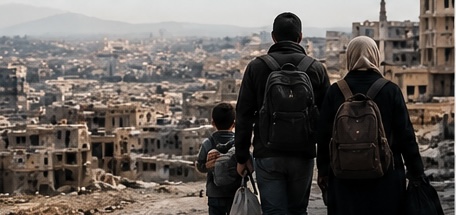
In the opening months of 2026, Syria witnessed a noticeable increase in spontaneous and facilitated returns of both internally displaced persons and refugees from neighbouring countries. While some areas in the west and centre of the country recorded relative security improvements, the humanitarian conditions facing returnees remained highly precarious. Large numbers of people found their homes destroyed or uninhabitable, basic services only partially restored, and livelihood opportunities scarce.
Humanitarian agencies reported that many returnees rapidly fell back into vulnerability due to the absence of sustained reconstruction support, limited access to civil documentation, and continued presence of unexploded ordnance in certain districts. Water and electricity networks operated at reduced capacity in multiple governorates, while healthcare facilities struggled with staff shortages and medicine supply gaps. Protection concerns, including arbitrary detention risks and property disputes, further complicated reintegration.
Geopolitically, the returns process became entangled with competing external agendas. Different regional actors sought to shape the narrative and conditions of return for political advantage, while international donors remained cautious about large-scale reconstruction funding in the absence of a comprehensive political settlement. As a result, humanitarian organisations operated in a constrained environment, able to provide emergency assistance but unable to bridge the structural gaps that kept returnees in a state of protracted need. The situation underscored that physical return alone does not equate to durable solutions when underlying governance and resource deficits persist.